Archive for category Knowledge Hub
Heater Rental Guide: Your Questions Answered
Posted by rentalstop in Equipment, Heaters, Knowledge Hub on November 12, 2026
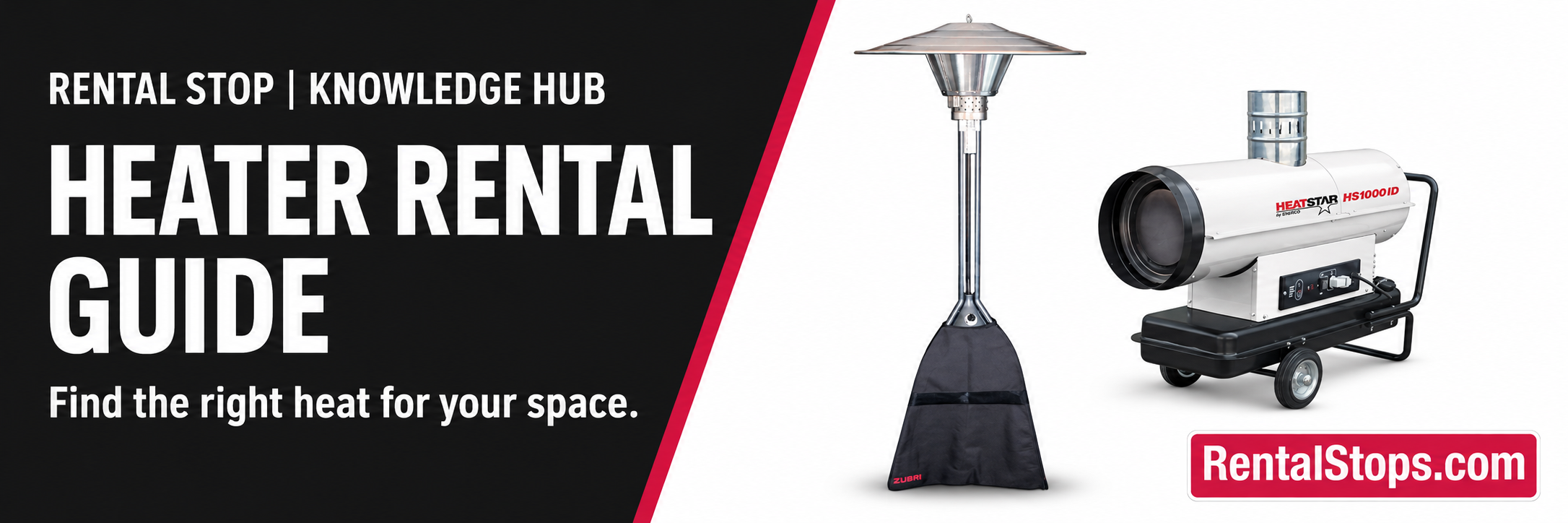
A cold front can change your party plans pretty quickly in North Texas. It can also make an outdoor project a lot less enjoyable. Before you grab the biggest heater available, start with where you need the heat and what you need it to do.
At Rental Stop, we help customers throughout Dallas-Fort Worth compare heater rentals for patios, tents, work areas and indoor spaces. Here are the questions that help narrow down the right option.
What type of heater should I rent?
What type of space are you wanting to heat? An outdoor gathering may need patio heaters around seating areas. A tented dinner needs a heating plan for the tent. A construction project may call for a propane, diesel or radiant heater, while a small indoor area may only need supplemental electric heat.
Tell us whether you want to warm people in one spot or heat the air throughout a larger area. Those are different jobs, and they can call for different equipment.
Which heater works for an outdoor party or patio?
Our 40,000 BTU Patio Heater provides warmth around the unit and includes a 20-pound propane bottle. It is an option for backyard gatherings, outdoor cocktail areas and patio seating.
Think about where guests will spend their time. You may need several heaters spread around the gathering areas. Wind, temperature and the layout affect how much warmth people feel. Patio heaters are for outdoor use only, and overhead clearance matters.
Can I use a patio heater inside a tent?
Do not assume a patio heater belongs under a tent or inside sidewalls. For a tented event, ask us about event heating setup.
Our selection includes 80,000, 170,000, 190,000 and 350,000 BTU Tent Heaters, plus a 125,000 BTU Event Heater. Add heating to the plan early so equipment and any ducting have a place in the layout.
What size heater do I need?
Length, width and height all matter. A tall room has more air to heat than a room with the same floor space and a low ceiling. We also need to know about insulation, wind, open doors and the temperature you hope to maintain.
Heater capacity is often listed in BTUs per hour. That number helps compare heat output, but it does not tell the whole story. There is no single heater-to-square-foot rule that works for every patio, tent or building. Tell us your dimensions and setup before choosing a size.
What is an indirect fired heater?
An indirect fired heater uses a heat exchanger to separate combustion exhaust from the heated air. With the correct installation, warm air can be ducted into a space while exhaust is kept outside and away from air intakes and openings.
Our 100,000 BTU Indirect Fired Heater uses diesel and electricity and supports ducting. Ask about this heater when you need warm air delivered into an enclosed space. Placement, exhaust routing and ducting are part of choosing the setup.
Which heaters should I ask about for a job site?
We carry propane and diesel heater options for construction work, but the work area determines which unit fits. Tell us if the site is outdoors, partly open or enclosed.
For example, our 220,000 BTU Diesel Heater is for outdoor construction use and requires electricity as well as diesel. It cannot be moved into an enclosed room just because the weather gets colder.
What is a radiant heater used for?
Radiant heat is useful when you want warmth directed toward a specific work area. Our 125,000 BTU Radiant Fired Heater delivers targeted heat without blowing air across the area. It runs on diesel and electricity.
Let us know what you are working on and where people will stand. A focused work area and a large room that needs even air heating may need different solutions. Radiant does not mean approved for every indoor space.
Do you have electric heaters for smaller indoor areas?
Yes. Our options include a Small Space Heater and an Electric Fireplace Heater. These are options to discuss for supplemental warmth in smaller areas.
Having the room dimensions and available outlets allows us to review the heater’s electrical requirements. Will anything else be sharing the circuit? An outlet nearby does not necessarily mean there is enough power available.
Will I need fuel, electricity or extra accessories?
It depends on the heater. Some fuel-burning units also need electricity for fans or controls. Confirm the fuel type, electrical connection and circuit requirements for the specific unit you reserve.
Ask what is included and what costs extra, including fuel, propane tanks, ducting and transport. Plan for setup and warm-up time as well as the hours of your event or workday. Run time varies with the heater, fuel supply and operating conditions.
Which heater should I ask about first?
| Your space or task | Options to discuss |
|---|---|
| Outdoor patio or Gathering area | 40,000 BTU Patio Heater |
| Tented reception, dinner or company event | Tent Heater or event heating setup |
| Warm air delivered into an enclosed space | Indirect fired heater with properly arranged exhaust and ducting |
| Outdoor construction work | Propane or diesel job-site heater suited to the task |
| Targeted warmth in a work area | 125,000 BTU Radiant Fired Heater |
| Supplemental heat in a small indoor area | Suitable electric heater |
Where can I rent a heater in Grand Prairie or Arlington?
Contact our Grand Prairie or Arlington team with your date, space dimensions and any other helpful information about what you need to heat. Tell us about the available power and how long you need heat. We will help you compare options, check availability and put together a quote.
Call Grand Prairie at (972) 336-0059 or Arlington at (817) 336-0059. Let’s get the right heat in the right place.
Important use and safety information: General guidance only; this guide does not replace equipment instructions or training. Follow all manufacturer instructions, rental guidance and applicable safety and venue requirements. Use heaters only in approved locations with required ventilation, exhaust arrangements and clearances. Fuel-burning heaters can create carbon monoxide hazards. Keep exits clear and combustible materials away. Plug portable electric space heaters directly into wall outlets, never extension cords or power strips. Do not leave portable heaters unattended or operate them while sleeping. Turn off fuel-burning heaters and allow them to cool before refueling. Contact us before use if unsure.

